

Actionable Steps Backed by Latest Environmental Trends
As climate change accelerates and resource depletion worsens, it’s no longer just “nice” to go green—it’s necessary. According to the IPCC 2025 Climate Update, every action, no matter how small, contributes to either reducing or worsening our environmental footprint. If you’re looking for sustainable yet practical green living habits, you’re in the right place.
This guide compiles green tips that anyone can adopt globally—whether you’re in Mumbai, Delhi, New York, Melbourne, or Miami. From saving energy at home to choosing planet-friendly products, these habits not only benefit the environment but also save you money and support your well-being.
Table of Contents
Why Going Green Matters in 2025
We are living through an environmental tipping point. The World Resources Institute reports that over 60% of countries face water stress, while India alone saw a 45% spike in plastic waste since 2020.
The good news? You don’t have to be a policy-maker to make an impact.
Green living is no longer about massive lifestyle changes—it’s about micro-habits that scale. Every reusable bottle, every walk instead of a drive, and every LED bulb swapped in matters. And the more people do it, the more powerful the ripple effect.
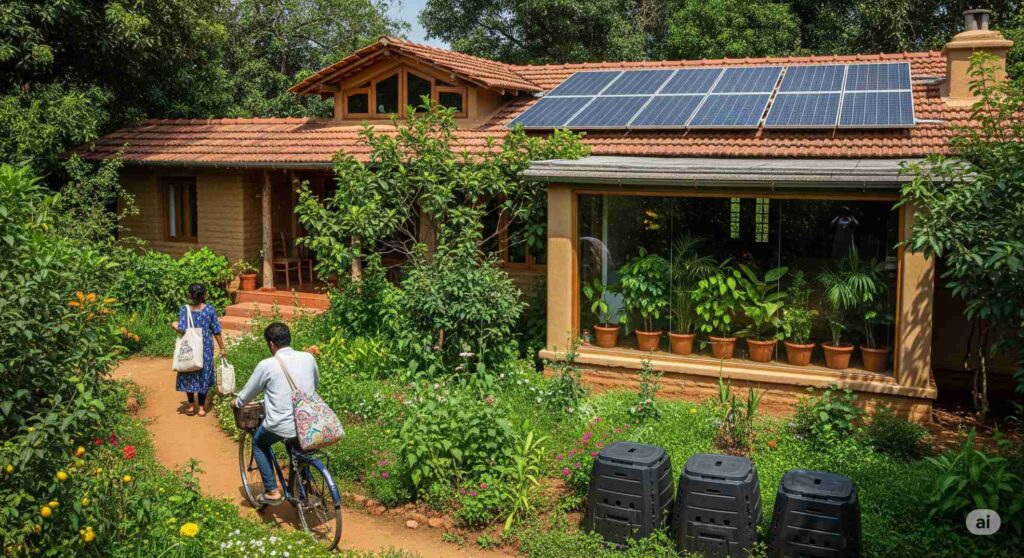
10 Simple and Easy-to-Adopt Green Habits
These sustainable habits require minimal effort but yield high impact:
1. Unplug and Save
Turn off and unplug electronics when not in use. Standby power accounts for up to 10% of household energy consumption, according to the Bureau of Energy Efficiency (India).
2. Switch to LED
LEDs use 75% less energy and last 25x longer than incandescent bulbs. They’re now available in affordable smart variants too.
3. Say No to Single-Use Plastics
Opt for reusable bags, steel straws, cloth napkins, and glass jars. Many Indian states and countries globally are banning plastic—get ahead of the curve.
4. Compost at Home
Food scraps make up nearly 30% of household waste. A home compost bin can turn that into rich fertilizer for your garden or balcony plants.
5. Water Smart
Fix leaks, install low-flow showerheads, and reuse RO waste water for cleaning or gardening.
6. Choose Plant-Based Meals
Eating even 2 meat-free days per week can reduce your carbon footprint significantly. India is already leading in plant-based nutrition.
7. Eco-Friendly Commutes
Walk, cycle, or use public transport. Carpool when possible. Not only does it reduce emissions, it lowers fuel bills.
8. Buy Local and Organic
Support local farmers and reduce food miles. Look for produce with less packaging.
9. Green Your Devices
Install apps that help monitor energy use or automate your lights and appliances.
10. Go Solar Where Possible
Subsidies in India and many other countries now make rooftop solar affordable. Even solar lamps or solar water heaters can make a difference.
Benefits of Going Green (Backed by Data)
| Impact Area | Benefits |
|---|---|
| Environmental | Reduced carbon emissions, lower landfill waste |
| Financial | Savings on electricity, water, and fuel bills |
| Health | Better indoor air quality, cleaner food |
| Social | Sets an example, builds a culture of sustainability |
According to UNEP 2025, households that implement green practices reduce their monthly environmental footprint by up to 30%.
Green Living Trends in 2025
India
- Rooftop solar is booming in tier-2 cities
- Composting and community waste segregation are growing in urban slums
- Eco-startups selling biodegradable utensils and packaging are gaining traction
Global
- The EU is pushing for mandatory eco-labels on fast-moving consumer goods
- Smart energy tracking apps are becoming mainstream
- Many U.S. cities are rolling out green tax incentives for individuals
Smart Ways to Start Today
Even if you’re new to sustainability, you can begin today:
- Choose one tip and practice it for 7 days
- Join a local clean-up drive
- Share your green journey on social media using relevant hashtags like #GoGreenIndia or #SustainableLiving2025
Remember: awareness is the first step—but consistent action creates real change.
Conclusion
In a world facing environmental collapse, every eco-conscious step you take matters. These simple and easy-to-adapt green tips are not just about saving the planet—they’re about future-proofing your life.
Whether you want to lower your utility bills, reduce your waste, or simply live more mindfully, you now have the tools to begin. Let’s build a cleaner, healthier, and more sustainable world—one small change at a time.
Ancient herbs.
Sourced from where they grow wild.
Henna, Bhringraj, Neem, Shikakai — single-ingredient powders grown in their native Indian regions, stone-ground and sealed within 72 hours of harvest. No fillers, no synthetic additives. Just the plant.
7 ISO certifications · Free shipping on orders ₹599+ · Ships from Noida, India
🔬 Reviewed for Scientific Accuracy by:
With over 15 years of academic and clinical experience, Dr. Gautam oversees the scientific and editorial integrity of educational content related to herbs, nutrition, and wellness.
ResearchGate Profile | ORCID
All FarmPURE Blog content is reviewed by domain experts to ensure it reflects the highest standards of botanical integrity, scientific relevance, and practical guidance. Our mission is to promote better health and beauty through the power of organic herbs, spices, and plant-based wellness solutions.
Disclaimer: The information provided in this blog is intended for general wellness and educational purposes only. It is not a substitute for professional medical advice, diagnosis, or treatment. Dr. Rashmi Gautam as scientific reviewers only, and do not provide or endorse personalized medical recommendations. Always consult a qualified healthcare provider before making decisions related to your health.

Hi, I’m Abhishek, the founder of The FarmPURE and someone who’s spent years exploring the intersection of nature, health, and mindful living. My journey began not in a lab or a boardroom, but in quiet moments with age-old remedies—curious about how something as simple as a leaf or a root could support the body and calm the mind.
With a lifelong passion for herbal wellness and sustainable choices, I created The FarmPURE to bring those traditional Indian remedies to modern homes—pure, honest, and rooted in nature. I also founded Just What Works, a health startup focused on cutting through the noise and offering wellness solutions backed by both science and simplicity.
Whether it’s through herbal powders, clean ingredients, or conscious living, my mission is to help others rediscover the power of nature—with integrity and care at every step.