
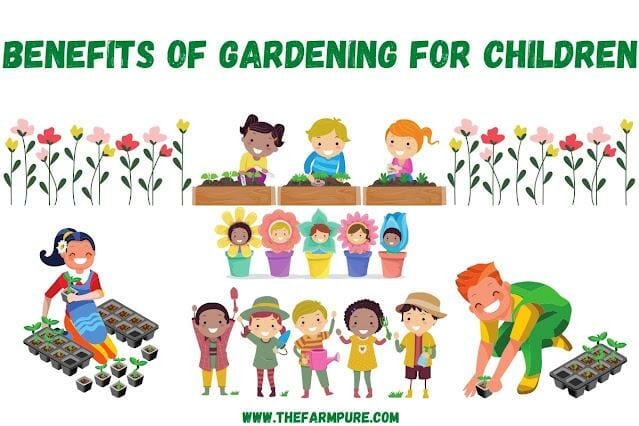
Gardening isn’t just about growing plants—it’s about growing children, too. In today’s screen-heavy world, gardening offers a refreshing way for kids to connect with nature, learn real-life skills, and develop confidence, all while having fun outdoors. Whether in a backyard, on a terrace, or through school projects, the impact of gardening on a child’s growth is deep and long-lasting.
In this post, we’ll explore the wide-ranging benefits of gardening for children, along with simple ways to get them involved, safe, and inspired.
Table of Contents
Why Gardening Is Good for Children
Gardening creates an environment where children naturally learn through hands-on experiences. It supports their physical, emotional, social, and intellectual development in ways few other activities can. Here’s how:
1. Builds Responsibility and Patience
Taking care of plants—watering them, watching them grow, and understanding their needs—teaches kids accountability and patience. It’s a gentle but powerful way to show that effort over time yields results.
2. Boosts Confidence and Emotional Well-being
Harvesting something they’ve grown with their own hands gives children a sense of pride and accomplishment. This boost in self-esteem can enhance emotional resilience and help them feel more connected to their environment.
3. Introduces Real-Life Science
From learning about plant life cycles to understanding pollination, composting, and ecosystems, gardening brings science to life. Kids begin to understand concepts like cause and effect—why plants need sunlight, what happens when they don’t get water, and how seasons affect growth.
4. Encourages Physical Activity
Digging, raking, planting, watering—gardening involves full-body movement. It helps kids improve their motor skills, coordination, and strength while getting them out into the fresh air.
5. Promotes Healthier Eating Habits
When children grow vegetables, herbs, or fruits, they’re more likely to eat them. It builds a positive relationship with food and gives them a deeper appreciation for where meals come from.
6. Improves Focus and Reduces Stress
Being outdoors and interacting with soil has proven calming effects. Gardening can be therapeutic, helping reduce anxiety and improve attention spans—especially beneficial for children with ADHD or sensory sensitivities.
Gardening Activities for Different Ages
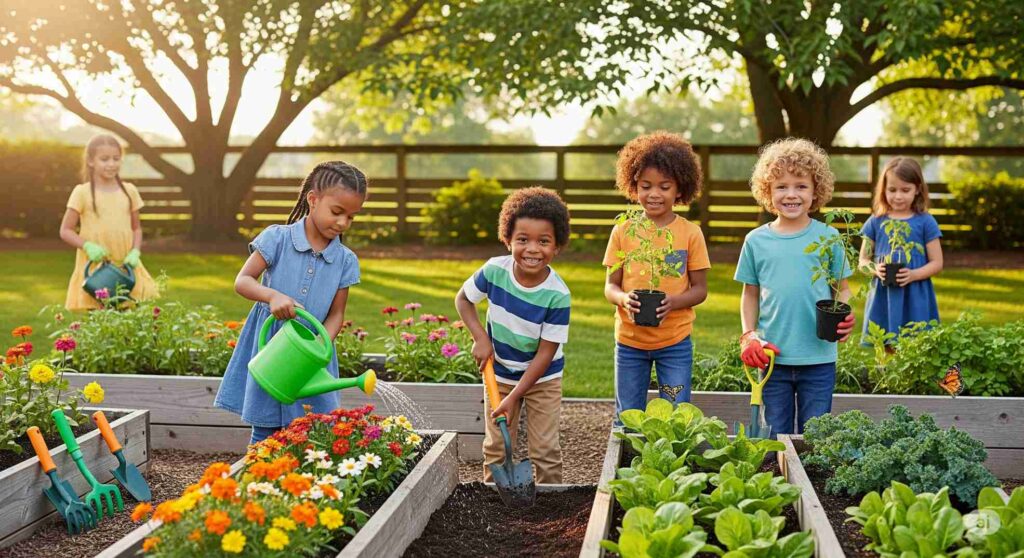
✅ Toddlers and Preschoolers
- Watering plants
- Digging with small tools
- Planting seeds or seedlings
- Watching butterflies and birds
- Making mud cakes and leaf collages
✅ Primary School-Aged Children
- Weeding and mulching
- Harvesting fruits and veggies
- Composting food scraps
- Identifying insects and pollinators
- Creating scarecrows or mini worm farms
✅ Tweens and Teens
- Designing garden layouts
- Starting a herb garden or vertical planter
- Managing a compost bin or rainwater system
- Tracking plant growth in journals
- Preparing meals with harvested produce
What to Grow: Kid-Friendly Plants
Choose plants that are easy to grow, colorful, and interactive to spark curiosity.
| Type | Examples |
|---|---|
| Fast-growing veggies | Tomatoes, radishes, beans, carrots |
| Fruits | Strawberries, melons, papaya |
| Sensory plants | Lamb’s ear (touch), lavender (smell), mint (taste) |
| Pollinator-friendly flowers | Sunflowers, marigolds, nasturtiums |
| Creepers and climbers | Pumpkin, cucumber, peas on teepees or trellises |
🛡️ Safety Tips for Gardening with Kids
- Use child-sized tools with smooth edges
- Avoid pesticides and chemical fertilizers—go organic
- Always supervise young children near water or sharp tools
- Ensure fencing or barriers for open gardens
- Teach sun safety: hats, sunscreen, and hydration
- Store tools and compost in a safe, locked place
Gardening with Kids in India
In India, gardening is gaining popularity across urban and rural homes alike. Even in compact apartments, terrace gardening and container planting are easy ways to get children started. Involving children in kitchen gardening—growing curry leaves, tulsi, coriander, or chilies—is a culturally familiar and engaging experience.
Additionally, Indian schools are increasingly integrating gardening into their curriculums under Environmental Science (EVS) and sustainability initiatives, helping raise a generation that values green living.
Tips to Get Children Interested in Gardening
- Let them choose what to plant
- Decorate pots or create garden markers together
- Use storytelling—name plants or invent garden characters
- Visit botanical gardens or local farms for inspiration
- Celebrate harvests with mini garden-to-table meals
Final Thoughts
Gardening nurtures more than plants—it nurtures curiosity, creativity, and a love for nature. In a world that needs more mindful, connected children, giving them a spade and a seed might just be one of the greatest gifts you can offer.
Ancient herbs.
Sourced from where they grow wild.
Henna, Bhringraj, Neem, Shikakai — single-ingredient powders grown in their native Indian regions, stone-ground and sealed within 72 hours of harvest. No fillers, no synthetic additives. Just the plant.
7 ISO certifications · Free shipping on orders ₹599+ · Ships from Noida, India
🔬 Reviewed for Scientific Accuracy by:
With over 15 years of academic and clinical experience, Dr. Gautam oversees the scientific and editorial integrity of educational content related to herbs, nutrition, and wellness.
ResearchGate Profile | ORCID
All FarmPURE Blog content is reviewed by domain experts to ensure it reflects the highest standards of botanical integrity, scientific relevance, and practical guidance. Our mission is to promote better health and beauty through the power of organic herbs, spices, and plant-based wellness solutions.
Disclaimer: The information provided in this blog is intended for general wellness and educational purposes only. It is not a substitute for professional medical advice, diagnosis, or treatment. Dr. Rashmi Gautam as scientific reviewers only, and do not provide or endorse personalized medical recommendations. Always consult a qualified healthcare provider before making decisions related to your health.

Hi, I’m Abhishek, the founder of The FarmPURE and someone who’s spent years exploring the intersection of nature, health, and mindful living. My journey began not in a lab or a boardroom, but in quiet moments with age-old remedies—curious about how something as simple as a leaf or a root could support the body and calm the mind.
With a lifelong passion for herbal wellness and sustainable choices, I created The FarmPURE to bring those traditional Indian remedies to modern homes—pure, honest, and rooted in nature. I also founded Just What Works, a health startup focused on cutting through the noise and offering wellness solutions backed by both science and simplicity.
Whether it’s through herbal powders, clean ingredients, or conscious living, my mission is to help others rediscover the power of nature—with integrity and care at every step.