
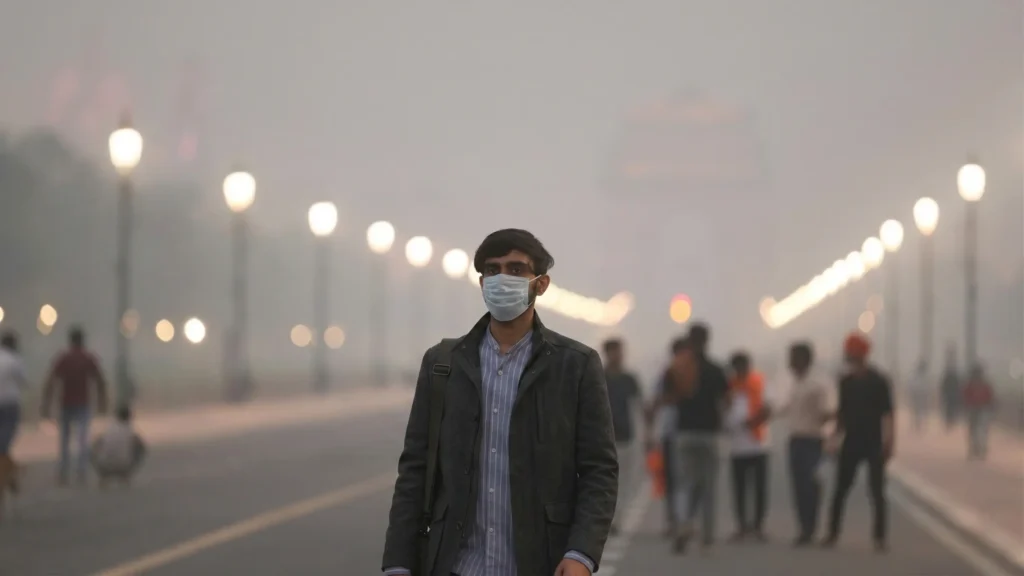
Open any window in Delhi, Mumbai, or Bengaluru this winter, and you’re not just breathing air. You’re breathing a cocktail of PM2.5 particles, heavy metals, polycyclic aromatic hydrocarbons, and nitrogen dioxide — a daily exposure that, over months and years, quietly works against the very system designed to protect you: your immune system.
This isn’t alarmism. According to the IQAir World Air Quality Report 2025, 66 of the world’s 100 most polluted cities are in India. New Delhi has retained its position as the world’s most polluted capital for the eighth consecutive year, with an annual average PM2.5 concentration of 82.2 micrograms per cubic metre — more than 16 times higher than the WHO guideline.
Most of us know this is bad for our lungs. Fewer of us understand that it’s also bad for our immunity — in ways that go far deeper than a seasonal cough.
And Ayurveda, it turns out, has been speaking to exactly this problem for thousands of years. Not with vague reassurances, but with specific herbs, specific mechanisms, and a specific philosophy about how a body under environmental siege can be helped to heal.
What PM2.5 Actually Does Inside Your Body
To understand the Ayurvedic response, you first need to understand the threat.
PM2.5 refers to fine particulate matter smaller than 2.5 micrometres in diameter. To put that in scale: a human hair is roughly 70 micrometres wide. PM2.5 particles are nearly 30 times smaller. They slip through your nose, your throat, your upper airways — and deposit directly in the alveoli of your lungs, the tiny air sacs where oxygen passes into your bloodstream.
Once there, the damage unfolds through five distinct pathways.
Pathway 1:
Oxidative stress. Oxidative stress plays a crucial role in the harmful effects of PM2.5 on the respiratory system, activating several detrimental pathways related to inflammation and cellular damage. PM2.5 particles are coated with transition metals and polycyclic aromatic hydrocarbons that trigger a flood of reactive oxygen species (ROS) — unstable molecules that damage cell membranes, DNA, and proteins. Your body’s antioxidant defences, designed for occasional stress, become overwhelmed by daily urban exposure.
Pathway 2:
Chronic airway inflammation. PM2.5 particulates can deposit in distal small airways and alveoli, causing inflammatory injury and oxidative damage to respiratory systems, with growing evidence linking PM2.5 exposure to airway inflammation, decreased lung function, and respiratory diseases including asthma and COPD. What makes this particularly troubling is the persistence: research has found that oxidative stress and inflammation triggered by PM2.5 persist in the lungs even after exposure cessation, contributing to long-term molecular damage. The smog season ends; the inflammation lingers.
Pathway 3:
Systemic immune disruption. This is where the story gets more concerning. PM2.5 doesn’t stay in your lungs. The finest nanoparticles cross the alveolar membrane and enter the bloodstream. Inhaled PM2.5 activates pulmonary sensory neurons, leading to the release of pro-inflammatory cytokines — circulating mediators that contribute to endothelial dysfunction and the systemic propagation of inflammatory signals to multiple target organs. Your immune system, meant to respond to genuine threats, begins misfiring — spending its resources on chronic low-grade inflammation rather than defending you against actual pathogens.
Pathway 4:
Immune cell imbalance. Studies show that human alveolar macrophages treated with PM2.5 express high levels of M1-associated pro-inflammatory cytokines and low levels of M2-associated anti-inflammatory cytokines — disrupting the immune balance that the body requires to both fight infection and resolve inflammation. In plain terms: pollution shifts your immune system toward a state of constant agitation that it cannot easily turn off.
Pathway 5:
Cortisol and adrenal stress. Chronic exposure to poor air quality activates the body’s stress response — raising cortisol levels that, over time, suppress immune function. Urban professionals in polluted cities often face a compounding problem: occupational stress, disrupted sleep, and pollution-driven cortisol elevation, all simultaneously pulling down immune resilience.
This is the picture that Ayurveda — written centuries before the industrial age — describes as Vayu Dushti: the vitiation or corruption of air, and its consequences for the body’s internal balance.
Immunomodulation, Not Just “Immunity Boosting”
The Ayurvedic Framework
Here’s where modern wellness language often misleads us.
The phrase “immunity booster” suggests that more immune activity is always better. But your immune system is a precision instrument, not a volume dial. An overactive immune response is the root of autoimmune disease. What the body needs under chronic environmental stress is not stimulation — it is modulation. The ability to respond appropriately, then stand down.
This distinction is not new. Ayurveda has a specific term for it: Rasayana. Rasayana herbs are those that restore the body’s fundamental vitality — what classical texts call Ojas — not by forcing a reaction, but by rebuilding the baseline from which proper immunity operates. They work slowly, deeply, and systemically. They modulate rather than stimulate.
Modern research is beginning to confirm what classical Ayurvedic physicians observed. A 2024 review published in Heliyon focused on the immunomodulatory properties of Giloy (Tinospora cordifolia), highlighting specific pathways including NF-κB pathway modulation and interleukin modulation as key mechanisms of its immune-regulating action. The NF-κB pathway is precisely the signalling route that PM2.5 activates to produce chronic inflammation. An herb that modulates this pathway is not a folk remedy — it is a mechanistically targeted intervention.
Five Ayurvedic Herbs That Address Pollution’s Five Pathways
Each of the damage pathways described above has a classical Ayurvedic herb that research suggests can help address it.
1. Giloy (Tinospora cordifolia) — for immune balance
Tinospora cordifolia is helpful in relieving stress and anxiety and has well-documented immunomodulatory properties, with the plant’s potential to inhibit free radical generation and protect membranes from radical-induced damage. Giloy works on the NF-κB pathway — the same inflammatory signalling cascade that PM2.5 chronically activates. Used as a Rasayana in classical texts, its action is modulating, not stimulating: it helps regulate immune responses rather than simply amplifying them. The stem of the Giloy plant — used in classical formulations — carries the highest concentration of its immunomodulatory alkaloids and glycosides.
2. Mulethi / Licorice (Glycyrrhiza glabra) — for airway inflammation
Mulethi is Ayurveda’s great respiratory herb, used in classical preparations for conditions of the throat and lungs. Its active compounds — glycyrrhizin and glabridin — have demonstrated anti-inflammatory properties through inhibition of the 5-lipoxygenase (5-LOX) pathway, which drives airway inflammation from pollutant exposure. For urban professionals whose throats and lungs bear the brunt of daily PM2.5 exposure, Mulethi’s role is as a soother and protector of the respiratory epithelium — the first line of defence that pollution directly damages.
3. Turmeric (Curcuma longa) + Shallaki (Boswellia serrata) — for oxidative stress and systemic inflammation
These two herbs work synergistically on separate but complementary inflammatory pathways — Turmeric’s curcumin on the NF-κB and COX-2 pathways, and Shallaki’s boswellic acids specifically on 5-LOX. This dual-pathway blockade is precisely what chronic pollution-induced inflammation requires, since PM2.5 activates both routes simultaneously.
Shallaki is traditionally known for joint support, but its 5-LOX inhibiting properties make it directly relevant to pollution-driven lung inflammation — an angle almost entirely absent from current wellness content. Its resin exudate, when sourced from wild forest-grown Boswellia trees, carries the highest concentration of active boswellic acids.
What is worth noting: Turmeric’s active compound curcumin has notoriously poor bioavailability in standard form. This is exactly the problem that classical Ayurvedic processing techniques — particularly the Bhāvanā method, in which herbs are repeatedly triturated with complementary herbal liquids — were developed to address. Bhāvanā-processed turmeric is not the same as a standard curcumin capsule.
4. Tulsi (Ocimum sanctum) — for microbial defence and respiratory resilience
Tulsi is perhaps India’s most deeply integrated medicinal plant — found in courtyards across the country, its presence considered sacred and its use for respiratory health considered self-evident by generations of Indian households. Modern research has validated this intuition: Tulsi’s volatile oils (eugenol, caryophyllene) demonstrate antimicrobial activity against common respiratory pathogens, and its adaptogenic properties help the body maintain equilibrium under environmental stress. When pollution weakens the respiratory lining and makes the body more vulnerable to infection, Tulsi works as both protector and resilience builder.
5. Amla (Emblica officinalis) — for antioxidant armour
PM2.5 is classified as “unhealthy for sensitive groups” at India’s average 2025 concentration of 48.9 µg/m³ — nearly 9.78 times higher than the WHO annual guideline. Against this level of sustained oxidative assault, the body needs potent antioxidant reinforcement. Amla — the wild Indian gooseberry — is one of the most concentrated natural sources of Vitamin C in the world, but its antioxidant activity extends far beyond ascorbic acid. Amla’s tannins, gallic acid, and ellagic acid provide a broad-spectrum antioxidant effect that addresses the free radical damage PM2.5 produces across multiple tissue types, including the lung epithelium and the bloodstream.
Why the Source and Processing of These Herbs Matters
There is a significant difference between reading a list of herbs and actually receiving their benefits.
India’s supplement market is crowded with products that list Giloy, Turmeric, and Tulsi on their labels. But the gap between what is labelled and what is bioavailable can be enormous, depending on three factors: where the herbs were grown, which part of the plant was used, and how they were processed before tableting.
Herbs grown under ecological stress in their natural forest habitats — rather than in monoculture farms — produce higher concentrations of the very secondary metabolites (alkaloids, polyphenols, terpenoids) that carry therapeutic value. Wild-harvested Giloy from forest trees, Boswellia resin from old-growth trees, Amla from forest-edge bushes — these are categorically different starting materials from their cultivated counterparts.
Processing matters equally. The classical Bhāvanā method — in which powdered herbs are repeatedly triturated with fresh herbal swaras (expressed juices) over multiple cycles — is Ayurveda’s answer to the bioavailability problem that modern science has only recently articulated. When Giloy powder is processed with Giloy swaras, when Tulsi powder is processed with Tulsi swaras, the resulting compound behaves differently in the body than the dry powder alone.
This is not a marketing claim. It is the logic of classical Ayurvedic pharmacy, documented in texts like the Charaka Samhita, and the reason why Rasayana formulations have always specified not just the herb, but the method.
A Practical Approach for Urban Indians
If you live in Delhi, Mumbai, Pune, Bengaluru, or any of India’s major cities, the evidence above is not hypothetical. It is your daily reality.
A few practical starting points:
During pollution season (October to February), prioritise the Giloy-Tulsi-Amla triad — whether as home preparations, classical kadhas, or well-formulated supplements. This trinity has been used in Ayurveda as an immune-supporting combination for centuries and is particularly relevant for respiratory resilience.
Year-round, Turmeric and Shallaki together address the baseline inflammation that chronic urban exposure creates. They work best in forms where bioavailability has been deliberately addressed — either through traditional fat-based preparations (Turmeric in warm milk with ghee, as Indian households have always done) or through Bhāvanā-processed formulations.
For cortisol and adrenal support, Ashwagandha (Withania somnifera) — used in Ayurveda as a primary adaptogen — addresses the stress-immunity connection that is inseparable from urban life.
If you are looking for a single formulation that brings these herbs together in a classical framework, JeevRasa Rakṣāya was developed specifically for this purpose — an urban immunity formula combining all of the herbs described above, wild-harvested and processed through the Rasraj Bhāvanā method. It is not a supplement designed for general wellness. It was formulated specifically for the immune challenges of India’s polluted urban environment.
 Sale
Sale
Urban Immunity · Adaptogenic
Rakshāya
Defensive resilience for the body you live in
The Ayurvedic Tradition Had a Word for This
The ancient concept of Vayu Dushti — vitiated air, corrupted wind — anticipated what we now measure as PM2.5 and AQI. Ayurveda’s response was never to simply endure environmental harm passively. It was to build internal resilience so profound that the body could meet its environment with equanimity.
The herbs described in this article are not new discoveries. They are rediscoveries — drawn from a tradition that understood, long before air quality monitors, that the air we breathe is either nourishing or depleting. And that the body, properly supported, can distinguish between the two.
Frequently Asked Questions
Q: Can Ayurvedic herbs actually protect you from air pollution? Ayurvedic herbs do not filter the air you breathe. What they may do — based on available research — is support the body’s capacity to manage oxidative stress, regulate inflammatory responses, and maintain immune balance under conditions of chronic environmental exposure. They are supportive, not protective in an absolute sense.
Q: How long do Ayurvedic herbs take to show results for immunity? Classical Ayurvedic Rasayana formulations are designed for sustained use, not acute intervention. Most traditional guidance recommends consistent use over 4–8 weeks before assessing effects on resilience and recovery patterns. They are not designed to replace acute medical treatment.
Q: Is Giloy safe to take every day? Giloy (Tinospora cordifolia) has a long history of daily use in Ayurveda. However, as with any herb, source and quality matter significantly. High-quality, GMP-manufactured Giloy from identified botanical sources is very different from unverified raw material. If you are on immunosuppressant medication or managing an autoimmune condition, consult an Ayurvedic physician before use.
Q: Can children take these herbs during pollution season? Giloy, Tulsi, and Amla have all been used in Ayurvedic paediatric formulations (Kaumarbhritya) for centuries. Tulsi as a kadha is widely used for children’s respiratory health across India. Dosages for children differ from adult formulations. Always consult a qualified Ayurvedic practitioner for specific guidance.
Q: What is the Bhāvanā process and why does it matter? Bhāvanā is a classical Ayurvedic pharmaceutical process in which powdered herbs are repeatedly triturated with prescribed herbal liquids (swaras or decoctions) over multiple cycles. The resulting compound has different absorption characteristics and synergistic properties compared to dry herb powder alone. It is one of Ayurveda’s core methods for enhancing the potency and bioavailability of herbal formulations.
Q: Does pollution affect children’s immunity differently than adults? Research suggests children may be particularly vulnerable, as their immune systems are still developing and their respiratory tracts are proportionally more affected by particulate matter per unit of body weight. The Ayurvedic tradition has always treated children as a distinct category requiring specific formulations and dosages — a recognition that aligns with modern immunology’s understanding of paediatric immunity.
This article is for educational purposes only. It does not constitute medical advice. If you are experiencing symptoms of respiratory illness or immune dysfunction, please consult a qualified healthcare professional.
Ancient herbs.
Sourced from where they grow wild.
Henna, Bhringraj, Neem, Shikakai — single-ingredient powders grown in their native Indian regions, stone-ground and sealed within 72 hours of harvest. No fillers, no synthetic additives. Just the plant.
7 ISO certifications · Free shipping on orders ₹599+ · Ships from Noida, India
🔬 Reviewed for Scientific Accuracy by:
With over 15 years of academic and clinical experience, Dr. Gautam oversees the scientific and editorial integrity of educational content related to herbs, nutrition, and wellness.
ResearchGate Profile | ORCID
All FarmPURE Blog content is reviewed by domain experts to ensure it reflects the highest standards of botanical integrity, scientific relevance, and practical guidance. Our mission is to promote better health and beauty through the power of organic herbs, spices, and plant-based wellness solutions.
Disclaimer: The information provided in this blog is intended for general wellness and educational purposes only. It is not a substitute for professional medical advice, diagnosis, or treatment. Dr. Rashmi Gautam as scientific reviewers only, and do not provide or endorse personalized medical recommendations. Always consult a qualified healthcare provider before making decisions related to your health.