Why I Even Asked This Question
I’ll be honest — I don’t cook. My kitchen adventures mostly involve making tea, heating leftovers, and occasionally slicing fruits (with more caution than skill). But when it comes to ordering groceries, I take it seriously.
Why? Because I’ve noticed that what I choose from the store directly impacts my energy levels, skin health, and even how much sugar I end up craving later in the day. I may not be the chef, but I’m the chief selector of ingredients at home.
And that’s how I stumbled upon dates sugar — that trendy, earthy-looking sweetener that health bloggers rave about. I’d already had my fair share of jaggery, honey, and (of course) plain white sugar. So, I decided to test dates sugar and see if it was really worth the hype.
First Impressions and Taste Test
The first time I added dates sugar to my tea, I immediately noticed two things:
- The sweetness was softer — not as sharp as sugar, and not as molasses-heavy as jaggery.
- The flavour felt “natural” — almost like a hint of dried fruit warmth in the background.
In comparison:
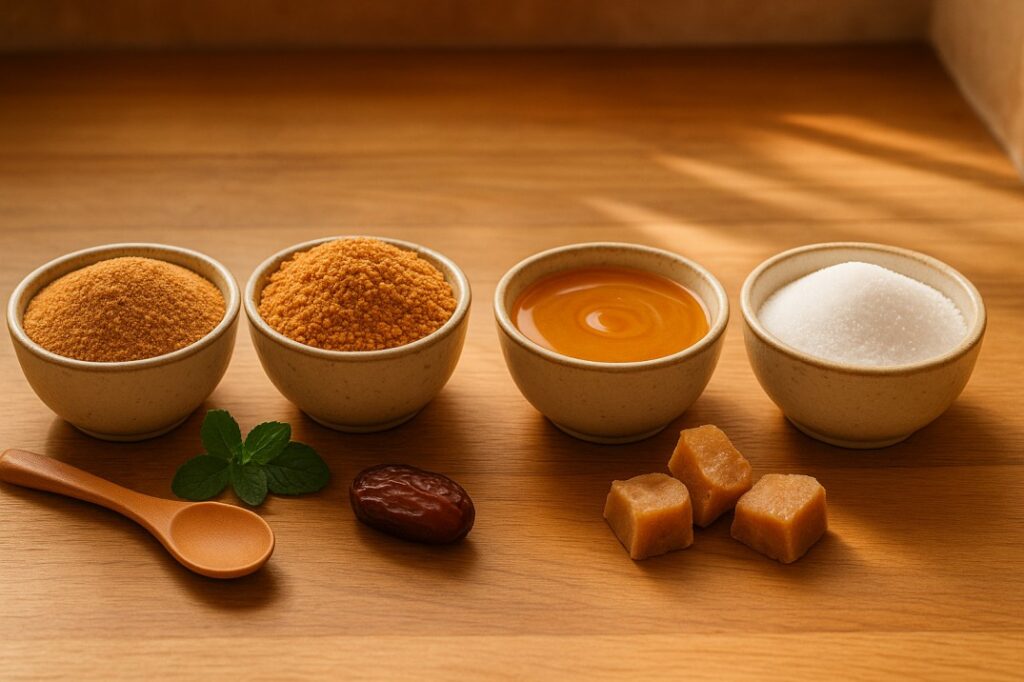
- White sugar: Sweet and… nothing else. No aftertaste, no character.
- Jaggery: Sweet + deep caramel notes, but sometimes overpowering.
- Honey: Sweet + floral undertones, but alters the flavour of drinks noticeably.
How Dates Sugar is Made (and Why That Matters)
Unlike refined sugar, dates sugar is simply dried dates ground into a fine powder. This means:
- No bleaching or chemical refining.
- You get the fiber, minerals, and antioxidants naturally found in dates.
- It doesn’t dissolve completely in liquids (a quirk that actually shows it’s less processed).
Jaggery and honey are also less processed than sugar, but they do go through heating and filtering steps that strip some nutrients.
Nutritional Showdown – Dates Sugar vs Jaggery, Honey, and Sugar
Here’s a simple per 100g comparison based on USDA and industry data:
| Sweetener | Calories | Fiber | Iron | Potassium | Glycemic Index (GI) |
|---|---|---|---|---|---|
| Dates Sugar | ~277 | 8g | 1.3mg | 656mg | 45–50 |
| Jaggery | ~383 | 0g | 11mg | 1056mg | 84 |
| Honey | ~304 | 0g | 0.4mg | 52mg | 58 |
| White Sugar | ~387 | 0g | 0mg | 2mg | 65 |
Observations from my experience + data:
- Dates sugar is the only one with actual fiber, which slows down sugar absorption.
- Jaggery wins on iron and potassium, but it spikes blood sugar much faster.
- Honey has trace nutrients but is still mostly sugar.
- White sugar is… well… empty calories.
Answering the Big Question – Is Dates Sugar Healthier?
From what I’ve seen and felt:
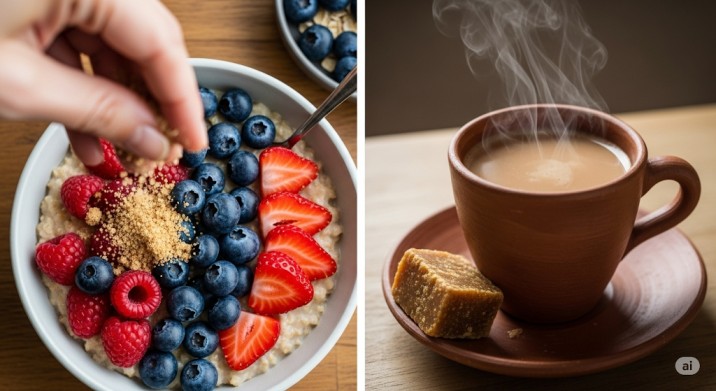
- Energy stability: My energy dips are less severe when I use dates sugar compared to jaggery or honey in tea or oats.
- Digestive comfort: The fiber helps me avoid that “too much sugar” sluggishness.
- Taste adaptability: Works well in smoothies, coffee, and baking without overpowering other flavours.
But here’s the important part — dates sugar is still sugar. Overdo it, and you’ll get the same issues: extra calories, potential weight gain, and impact on blood sugar.
When I Still Choose Jaggery, Honey, or Sugar
- Jaggery: For making traditional Indian sweets — the taste is unmatched.
- Honey: In lemon-ginger tea when I have a sore throat.
- Sugar: Rarely, but for crisp desserts where texture matters.
Best Practices If You Want to Switch
- Start small – Replace sugar in one daily drink with dates sugar.
- Check the label – Pure dates sugar should have just one ingredient: dates.
- Mind the recipes – Dates sugar doesn’t dissolve fully, so it’s better for baking or thick drinks.
My Takeaway After Months of Trying Them All
If I had to rank purely on health + taste balance, my order would be:
- Dates Sugar – Best for daily use in moderate amounts.
- Jaggery – Great for cultural and flavour-rich recipes.
- Honey – Good as a natural remedy or occasional sweetener.
- White Sugar – Keep as an occasional indulgence.
I may not be the one stirring the pot, but I’ve learned that what goes into the pot can be just as important as how it’s cooked.
Quick FAQ for Answer Engine Optimization
Q: Is dates sugar diabetic-friendly?
A: It has a lower GI than sugar, but moderation is still key for blood sugar control.
Q: Can I replace sugar 1:1 with dates sugar in recipes?
A: Yes for baking, but expect a slight texture difference in liquids.
Q: Does dates sugar taste like dates?
A: Mildly — it has a subtle fruity-caramel note.
Ancient herbs.
Sourced from where they grow wild.
Henna, Bhringraj, Neem, Shikakai — single-ingredient powders grown in their native Indian regions, stone-ground and sealed within 72 hours of harvest. No fillers, no synthetic additives. Just the plant.
7 ISO certifications · Free shipping on orders ₹599+ · Ships from Noida, India
🔬 Reviewed for Scientific Accuracy by:
With over 15 years of academic and clinical experience, Dr. Gautam oversees the scientific and editorial integrity of educational content related to herbs, nutrition, and wellness.
ResearchGate Profile | ORCID
All FarmPURE Blog content is reviewed by domain experts to ensure it reflects the highest standards of botanical integrity, scientific relevance, and practical guidance. Our mission is to promote better health and beauty through the power of organic herbs, spices, and plant-based wellness solutions.
Disclaimer: The information provided in this blog is intended for general wellness and educational purposes only. It is not a substitute for professional medical advice, diagnosis, or treatment. Dr. Rashmi Gautam as scientific reviewers only, and do not provide or endorse personalized medical recommendations. Always consult a qualified healthcare provider before making decisions related to your health.

Hi, I’m Abhishek, the founder of The FarmPURE and someone who’s spent years exploring the intersection of nature, health, and mindful living. My journey began not in a lab or a boardroom, but in quiet moments with age-old remedies—curious about how something as simple as a leaf or a root could support the body and calm the mind.
With a lifelong passion for herbal wellness and sustainable choices, I created The FarmPURE to bring those traditional Indian remedies to modern homes—pure, honest, and rooted in nature. I also founded Just What Works, a health startup focused on cutting through the noise and offering wellness solutions backed by both science and simplicity.
Whether it’s through herbal powders, clean ingredients, or conscious living, my mission is to help others rediscover the power of nature—with integrity and care at every step.