
Why Grow Ginger at Home?
If you’re a health-focused home gardener or someone looking to eat more mindfully, ginger deserves a place in your backyard or balcony. This super-root isn’t just for tea and curries—it’s a healing powerhouse known for aiding digestion, reducing inflammation, and boosting immunity.
Growing it organically at home? That’s the real spice of life.
Table of Contents
A Brief History: Ginger’s Roots in India and Beyond
Ginger (Zingiber officinale) has deep roots in Indian and Southeast Asian traditions. It’s been a cornerstone in Ayurveda for thousands of years—used for everything from coughs and nausea to joint pain and detoxification. Today, it’s prized worldwide for its culinary versatility and healing properties.
Health Benefits of Ginger
- Improves digestion & gut health
- Anti-inflammatory & immune-boosting
- Reduces nausea and motion sickness
- Relieves menstrual discomfort
- Improves blood circulation
- Naturally detoxifies the body
Growing Ginger at Home: Quick Snapshot
| Requirement | Ideal Conditions |
|---|---|
| Climate | Warm, tropical (zones 9–12) |
| Sunlight | 2–5 hours direct sunlight daily |
| Soil pH | 5.5–6.5, rich in organic matter |
| Watering | Regular, moist but not soggy |
| Harvest Time | 8–10 months after planting |
How to Grow Ginger Organically: Step-by-Step Guide
1. Choose a Sunny Spot
Pick a space with morning sunlight and partial shade in the afternoon. Avoid water-logged zones.
2. Buy Quality Organic Rhizomes
Look for plump, healthy, chemical-free ginger pieces (rhizomes) with visible buds or “eyes.” Local nurseries or certified organic stores are ideal.
3. Prep the Soil or Container
Use well-draining, loamy soil enriched with compost. If growing in a container, choose one that’s at least 12 inches deep with drainage holes.
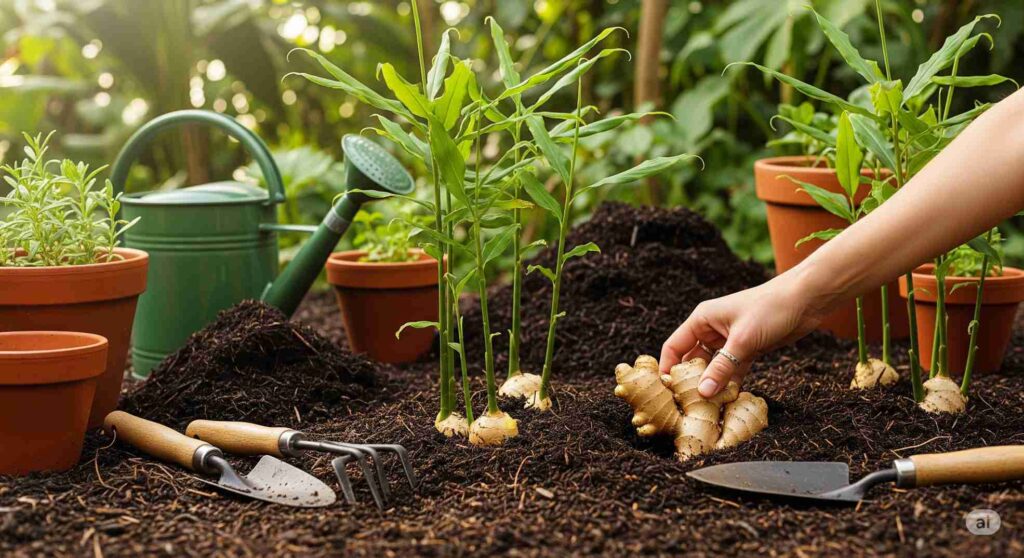
4. Plant the Ginger
- Cut rhizomes into 1–2 inch pieces, each with at least one eye.
- Plant them horizontally, just 1–2 inches below the surface.
- Space rhizomes about 12 inches apart.
5. Water Gently, Mulch Often
Keep the soil moist but never soggy. Add a layer of organic mulch (straw, dry leaves, or sugarcane bagasse) to retain moisture and prevent weeds.
6. Feed Organically
Every few weeks, add compost or a nitrogen-rich organic fertilizer like vermicompost or composted cow dung.
Growing Ginger in Pots or Indoors
- Use a wide, shallow pot (12–14 inches) for horizontal rhizome growth.
- Place it near a sunlit window or on a balcony.
- Water as needed, ensuring the container drains well.
- Move the pot indoors during cold months.
When & How to Harvest Ginger
Ginger is usually ready 8–10 months after planting. Signs it’s time:
- Leaves begin to yellow and die back.
- Soil dries slightly near the base.
To harvest:
- Gently dig around the rhizome using your hands or a small trowel.
- Shake off soil and rinse gently with water.
- Keep a few pieces aside to replant!
Propagate Ginger Year-Round
Once you’ve got your first harvest, you can replant a few rhizomes and continue the cycle. In tropical Indian climates, you can stagger planting to enjoy multiple harvests a year.
Common Issues & Organic Fixes
| Problem | Organic Solution |
|---|---|
| Yellowing leaves | Too much sun or overwatering → Adjust placement |
| Aphids or mites | Neem oil spray or garlic-chili spray |
| Fungal rot | Improve drainage, use dry mulch |
Spice Up Your Health & Kitchen—Naturally
Homegrown ginger is more than a culinary delight—it’s a symbol of wellness and self-sufficiency. Whether you’re adding it to your chai, stir-fry, or morning detox routine, you’ll feel the difference.
And the best part? It’s incredibly simple to grow.
Bonus Tip: Where to Buy Organic Ginger Rhizomes in India
You can buy certified organic ginger rhizomes from:
- Food Stories
- Kaze Living
- Amazon India (verified organic sellers)
- Local organic haats or farmers’ markets
Takeaway: Why You Should Grow Ginger at Home
- Easy for beginners
- No synthetic fertilizers or pesticides
- Saves money and ensures freshness
- Year-round availability
- Health benefits + kitchen value
Ancient herbs.
Sourced from where they grow wild.
Henna, Bhringraj, Neem, Shikakai — single-ingredient powders grown in their native Indian regions, stone-ground and sealed within 72 hours of harvest. No fillers, no synthetic additives. Just the plant.
7 ISO certifications · Free shipping on orders ₹599+ · Ships from Noida, India
🔬 Reviewed for Scientific Accuracy by:
With over 15 years of academic and clinical experience, Dr. Gautam oversees the scientific and editorial integrity of educational content related to herbs, nutrition, and wellness.
ResearchGate Profile | ORCID
All FarmPURE Blog content is reviewed by domain experts to ensure it reflects the highest standards of botanical integrity, scientific relevance, and practical guidance. Our mission is to promote better health and beauty through the power of organic herbs, spices, and plant-based wellness solutions.
Disclaimer: The information provided in this blog is intended for general wellness and educational purposes only. It is not a substitute for professional medical advice, diagnosis, or treatment. Dr. Rashmi Gautam as scientific reviewers only, and do not provide or endorse personalized medical recommendations. Always consult a qualified healthcare provider before making decisions related to your health.