
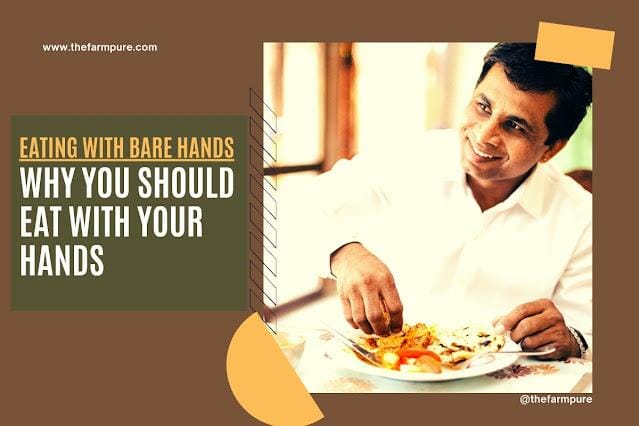
Discover the ancient wisdom and modern health benefits behind eating with your hands.
Introduction: The Traditional Practice of Eating with Bare Hands
Across many Eastern cultures, eating with your hands isn’t just a tradition—it’s a mindful and beneficial practice rooted in Ayurveda and ancient wisdom. While the West largely relies on cutlery, there’s growing interest in returning to the primal method of hand-eating for health, connection, and digestion. In this blog, we’ll uncover 11 science-backed benefits of eating with your hands and how this simple habit can lead to better well-being.
1. Ayurveda and the Five Elements in Your Hands
According to Ayurveda, each finger represents one of the five elements:
- Thumb: Space
- Index Finger: Air
- Middle Finger: Fire
- Ring Finger: Water
- Little Finger: Earth
Eating with your hands activates these energies and stimulates the digestive system by triggering the production of enzymes and gastric juices.
2. Improves Digestion by Stimulating Nerve Endings
Our fingertips have numerous nerve endings that send signals to the brain, preparing the stomach for food. The tactile experience of touching food promotes mindful eating and enhances digestion.
3. Reduces Risk of Type 2 Diabetes
Studies suggest that eating quickly with cutlery is linked to insulin resistance and Type 2 diabetes. Eating with your hands slows you down, encouraging smaller bites and better portion control.
4. Mindful and Conscious Eating
Eating with your hands increases awareness of texture, temperature, and flavor. This mindfulness leads to improved satisfaction and fewer cravings post-meal.
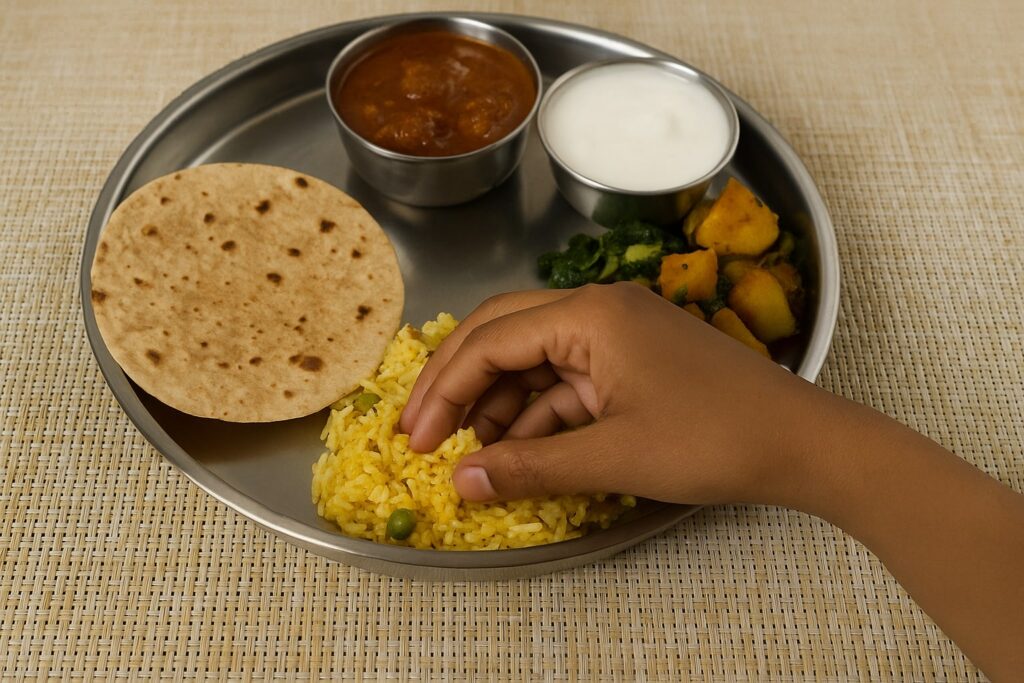
5. Improved Hygiene—Contrary to Popular Belief
Clean, freshly washed hands are often more hygienic than spoons that may harbor bacteria from improper storage. Many cultures promote handwashing rituals before and after meals, ensuring cleanliness.
6. Supports Portion Control
Hand-eating naturally limits the size of each bite. This helps prevent overeating and promotes better digestion by giving your body time to signal fullness.
7. Promotes Healthy Blood Sugar Levels
Slower eating means steadier glucose absorption. When you eat with your hands, you’re less likely to spike your blood sugar due to the slower pace of consumption.
8. Prevents Mouth Burns
Your fingers can sense the temperature of food better than a fork or spoon. This prevents burns on your tongue or mouth by allowing you to adjust the temperature or wait.
9. Keeps Food Free of Foreign Flavors
Unlike metal, plastic, or wood utensils that may impart unwanted taste, hands are neutral and allow food to retain its authentic flavor—provided they’re clean.
10. Creates a Deeper Connection with Food
Eating with your hands allows you to mix, scoop, and shape food uniquely—especially in Indian, Middle Eastern, and African cuisines. This creates a sensory and emotional connection to what you’re eating.
11. Reduces Overeating and Promotes Satiety
Touching and feeling your food fosters a more satisfying meal experience. Research suggests that those who eat with their hands are better at reading their body’s hunger and fullness cues, which reduces the tendency to overeat.
Final Thoughts: Rediscover the Joy of Eating with Hands
Eating with your hands is more than just a cultural practice—it’s a holistic approach to health, mindfulness, and connection. From improved digestion to enhanced food awareness, the benefits are both ancient and scientifically supported.
Frequently Asked Questions (FAQs)
Q: Is it healthy to eat with bare hands?
A: Yes! Clean hands can stimulate digestion and enhance your body’s connection with food. They’re often more hygienic than cutlery when properly washed.
Q: Can eating with hands help with weight loss?
A: Eating slowly with your hands promotes portion control and mindful eating, which helps in reducing calorie intake and preventing binge eating.
Q: Why does food taste better when eaten with hands?
A: The tactile interaction stimulates your senses, allowing for better enjoyment and deeper sensory satisfaction of your meals.
Ancient herbs.
Sourced from where they grow wild.
Henna, Bhringraj, Neem, Shikakai — single-ingredient powders grown in their native Indian regions, stone-ground and sealed within 72 hours of harvest. No fillers, no synthetic additives. Just the plant.
7 ISO certifications · Free shipping on orders ₹599+ · Ships from Noida, India
🔬 Reviewed for Scientific Accuracy by:
With over 15 years of academic and clinical experience, Dr. Gautam oversees the scientific and editorial integrity of educational content related to herbs, nutrition, and wellness.
ResearchGate Profile | ORCID
All FarmPURE Blog content is reviewed by domain experts to ensure it reflects the highest standards of botanical integrity, scientific relevance, and practical guidance. Our mission is to promote better health and beauty through the power of organic herbs, spices, and plant-based wellness solutions.
Disclaimer: The information provided in this blog is intended for general wellness and educational purposes only. It is not a substitute for professional medical advice, diagnosis, or treatment. Dr. Rashmi Gautam as scientific reviewers only, and do not provide or endorse personalized medical recommendations. Always consult a qualified healthcare provider before making decisions related to your health.